0

Your Cart is Empty

Our Story
  • My Account
  • Add description, images, menus and links to your mega menu

  • A column with no settings can be used as a spacer

  • Link to your collections, sales and even external links

  • Add up to five columns

  • This is Water: An Alumni Phone Call

    August 24, 2025 6 min read

    This is Water: An Alumni Phone Call

    The "Water" We Swim In

    The Alumni Association, of my Alma Mater, called today. Second contact since 2008—and this conversation became something other than a donation ask or a delightful inquiry about their mentorship program. It was my perspective and experiences showing how my "a+b=c," with "c," and "c" may feel very unsettling, if you let it. The best I can do, was to give them hope, that the generation just older than you, sees how unhealthy it is; and that some are doing their best at blueprinting regenerative systems so that 

    When the student mentioned environmental reclamation projects along the Mississippi, I felt my former self. That was supposed to be my life—healing damaged landscapes, restoring ecosystems. Until I learned how the municipal environmental construction and bidding construction game really works: lowest bidder wins, design excellence is irrelevant, and the decisions are made by engineers, contractors, a construction companies need to stay afloat with low margin work, or politicians, long before any landscape architect enters the room.

    This call pulled me back into my life experiences—the crumbling pillars I once trusted—revealing a truth that's shaped everything since.

    Life Experiences: The Pillars That Crumbled

    These stories aren't isolated; they're the foundation of the knowledge I use to sense-make the world. Each one showed me how "normal" is a myth, and how many systems we rely on may fail us consistently in life. Back then, learning to swim meant clinging to these pillars for stability. Now, it means letting go.

    Design, Environmentalism, Value Engineering?

    In my early career aspirations, I envisioned a world where passion for healing the earth mattered. But reality hit: contracts go to the cheapest bid, not the best design. Damned if you do and damned if you don't get that municipal bid for construction contract. It's a rigged game, and I was out before I even started.

    The New Corporate Squeeze

    My father spent 25 years as the top salesman at one of America's ten largest corporations. His reward? The final year before retirement, they paid him less than ever while demanding twice the work. Smartphones became digital leashes, squeezing every moment of bandwidth from a man who'd given them decades. He told me he wouldn't wish his job on his children. Then, when I was desperate for money, he asked if I wanted it anyway. "You told me you wouldn't wish this on any of us," I said. "Why would I want that?" His answer was simple: "Because you need money."

    That's when I left for Guatemala. I needed to see where there was no "normal," where perspective shifts with geography and culture. From New York to Milwaukee, Twin Cities to Barcelona, each place revealed the same truth: normal is a myth we tell ourselves to feel safe.

    More of Healthcare's Crumbles and "Alternate Truths"

    After my father's experience, I explored physical therapy as a career. One PT told me straight: "Don't do it. You'll be 40 with a doctorate making $55,000 a year." Another showed me how the system really works—he'd tell insurance companies patients needed twice the sessions required, knowing they'd only approve half. His three offices weren't about passion for healing; they were about maximizing referrals and gaming the system.

    I watched patients going through the motions, lonely and disconnected, while their providers juggled insurance fraud just to deliver basic care. The same corruption I'd seen in environmental contracting, in corporate sales, in education—every pillar of truth we're told to trust.

    Formal Education or Education in HOW We Process The World

    And now here's this student, two decades younger than me, calling alumni for donations and mentors, to a university that removed practical courses like estimating and contracting from landscape architecture. They're creating unemployable graduates who need expensive master's degrees, feeding the education machine while leaving students drowning in debt and confusion.

    These experiences weren't just setbacks; they exposed a pattern of institutional failure. They led me to question everything—and uncover my truth.

    When Pillars of Truth Crumble: Double Down or Hold Multiple Truths


    From these collapses, a core truth emerged: in a world of artificial everything, authenticity is the only anchor. Why does everyone else seem to just look away? Can't we still hold this as a data point objectively so that we learn from it.

    But we couldn't hang up. Two strangers, generations apart, clinging to a real conversation in a world of digital noise.

    She was seven when smartphones exploded in 2008. That's the year everything changed, I graduated from the institution is is calling from, and stock market crashed, but big finance got bailed out, etc. Global math scores peaked. Happiness plummeted. Adolescent well-being fell off a cliff and never recovered. Today, only 27% of men have six or more close friends. Fifteen percent have zero—a fivefold increase since 1990. Loneliness is killing us as effectively as cigarettes or alcohol.

    Every career path that looked solid to my generation has turned to quicksand. Every institution we trusted has revealed its corruption. Every promise of security has evaporated. All we have left is each other, and we're lonelier than ever.

    That's my perspective. Not comfortable, not profitable, not Instagram-ready. But real to me. And in a world drowning in noise, Sense-making of reality itself becomes revolutionary. This takes stillness and reflection and what holds society together are part of the "FIBERS OF HUMANITY." Chamath Palihapitiy, ex-Facebook Executive,believes the tools that have been created today (which are exponentially growing) are destroying the way in which society work...which stoically needs be held as an objectively, within our sense-making processes, when we try to inject ourselves into "how society is working" and how we work within society.

    This is a call for timeless learnings (and creations) which outlast the short-sighted and finite games, with individuals and companies to strive regenerative business models. With resources made available for, innovators, brands and the cultural influence of the future, they have, to be heavily explored and supported. It is not easy and either is societal collapse. 

    Timeless Learnings: Real Freedom & Real Education

    When Pillars of Truth which we rely on to function as a healthy society, like government, finance, religion, education, healthcare, and capitalism, loose the integrity we thought they had, what information do we use to make sense of the world and our actions, with?? The values that inform our actions, which create our first hand knowledge, through experience. Doing the best you can, being impeccable with your word, not taking things personally, not making assumptions, while seeing those data points objectively.

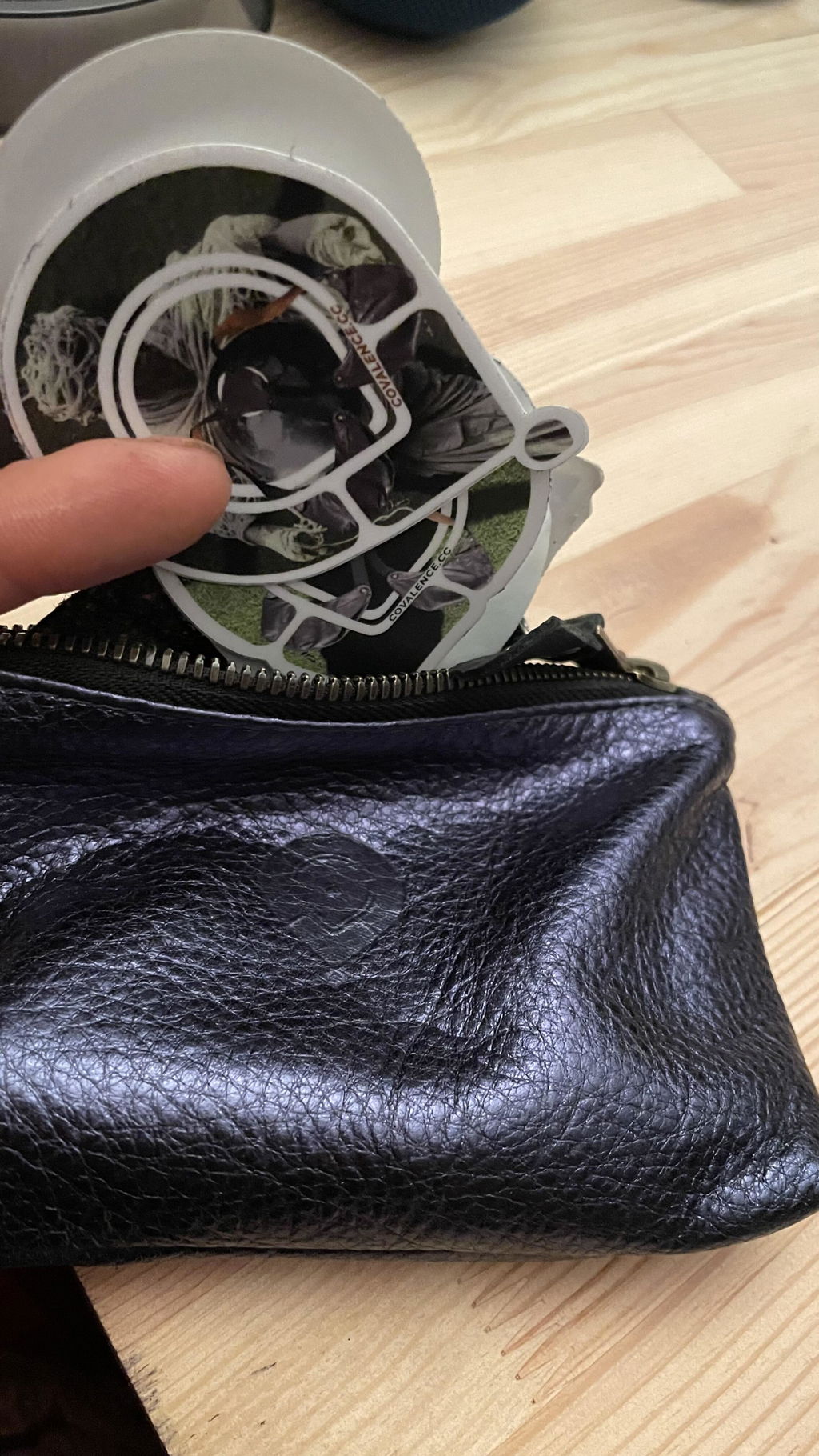
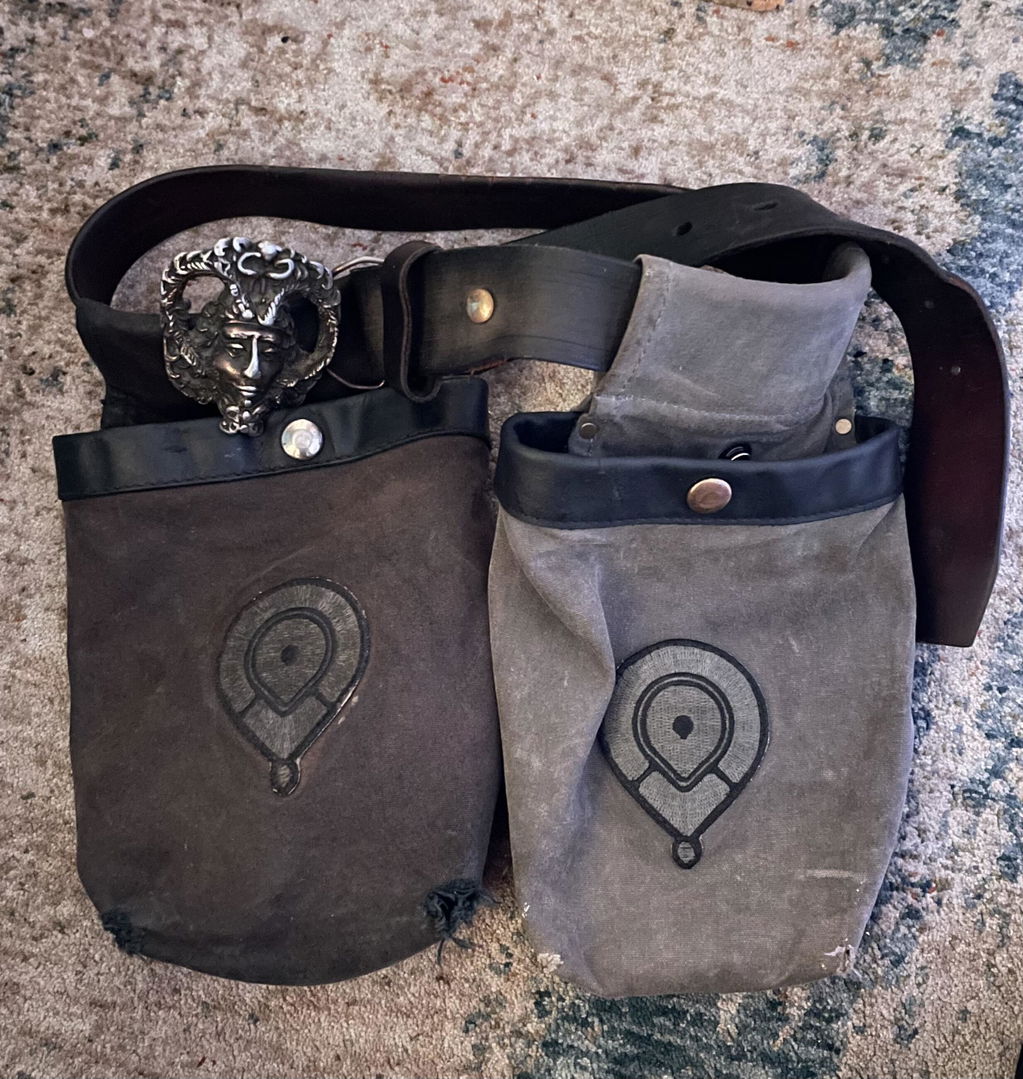
    This is why Covalence isn't just a leather bag company to me, but is: 

    • a collection of "Trim Tab" daily tools
    • Tools for Peopling
    • Behavioral Design, emotional reprogramming within your daily operating system,
    • The 12 Step Principles,
    • the YMCA's Leadership Program,
    • Boy Scouts,
    • it's Girl Scouts,
    • it's High Fashion
    • it's the substance and optimism people are looking for in their media
    •  it's Cultural Engineering,
    •  it's Virtue signaling
    • it's a creation for confidence
    • it's an empowered sense of self, to reinforce your existing outward facing self
    •  it's Time Machine-a way to give you more time and bandwidth
    • it's meeting society where it's at.
    • It's the best I can do, to communicate my perspective.
    • It's how I find people who believe what I believe

    It's my expression which allows me to acknowledge harsh realities, appreciate and maintain my healthy subconscious, present my solutions, and let my art be my Denial of Death. 1

    Ernest Becker explains how creative and artistic individuals deny both physical reality and culturally-endorsed immortality projects, expressing a need to create their own reality. The primary difference is that creative individuals have talents that allow them to create and express a reality that others may appreciate, rather than simply constructing an internal, mental reality. The complexity of it all is exactly why I don't mention it, but with so many factors compromising the existence of my catharsis, I've got nothing to loose, except not fully expressing myself. 

    Art becomes the only truth I can trust—each piece a reflection of thought processes, materials with stories, narratives in the materials I use. I prefer to Show, not tell. Create objects that anchor us to something real while technology accelerates cultural and societal momentum beyond our ability to process it.

    Adaptability isn't just useful anymore; it's survival. The world changes exponentially faster than our ability to make sense of it. What we thought we knew when we started thinking about it, is already obsolete by the time we articulate it. 

    So I keep one foot on solid ground—making things with my hands, honoring craftsmanship, standing on the shoulders of makers who came before. The other foot stays with the people, meeting them where they are, even when where they are is lost, confused, and desperately lonely in a hyperconnected disembodied world.

    These learnings redefine survival. Learning to swim used to mean finding solid ground in trusted systems. Now, it looks different: it's about fluid adaptation, human connection, and creating your own anchors in quicksand.

    Questions That Linger: The Art of Swimming

    That student caller navigates a reality I couldn't have imagined at her age.

    The conversation finally ended, but the questions linger: How do we build lives of meaning when every structure designed to support us has failed? How do we connect authentically when technology profits from our isolation? How do we find solid ground in quicksand?

    Maybe the answer isn't in finding solid ground. Maybe it's in learning to swim and now "this is water."